
The treatment is the easy part
A peel, a wax, a set of lashes or a microblading session is skilled work, and your team already knows how to do it. What eats the day is everything around it: the medical history that has to be asked again, the consent that has to be signed before the needle or the acid comes out, the patch test that may or may not still be valid, the before photo on someone's personal phone, and the serum whose batch nobody wrote down.
F9.contact moves that work onto the client's card. It happens before the client walks in, and it stays with the client after they leave.
Intake that matches the treatment
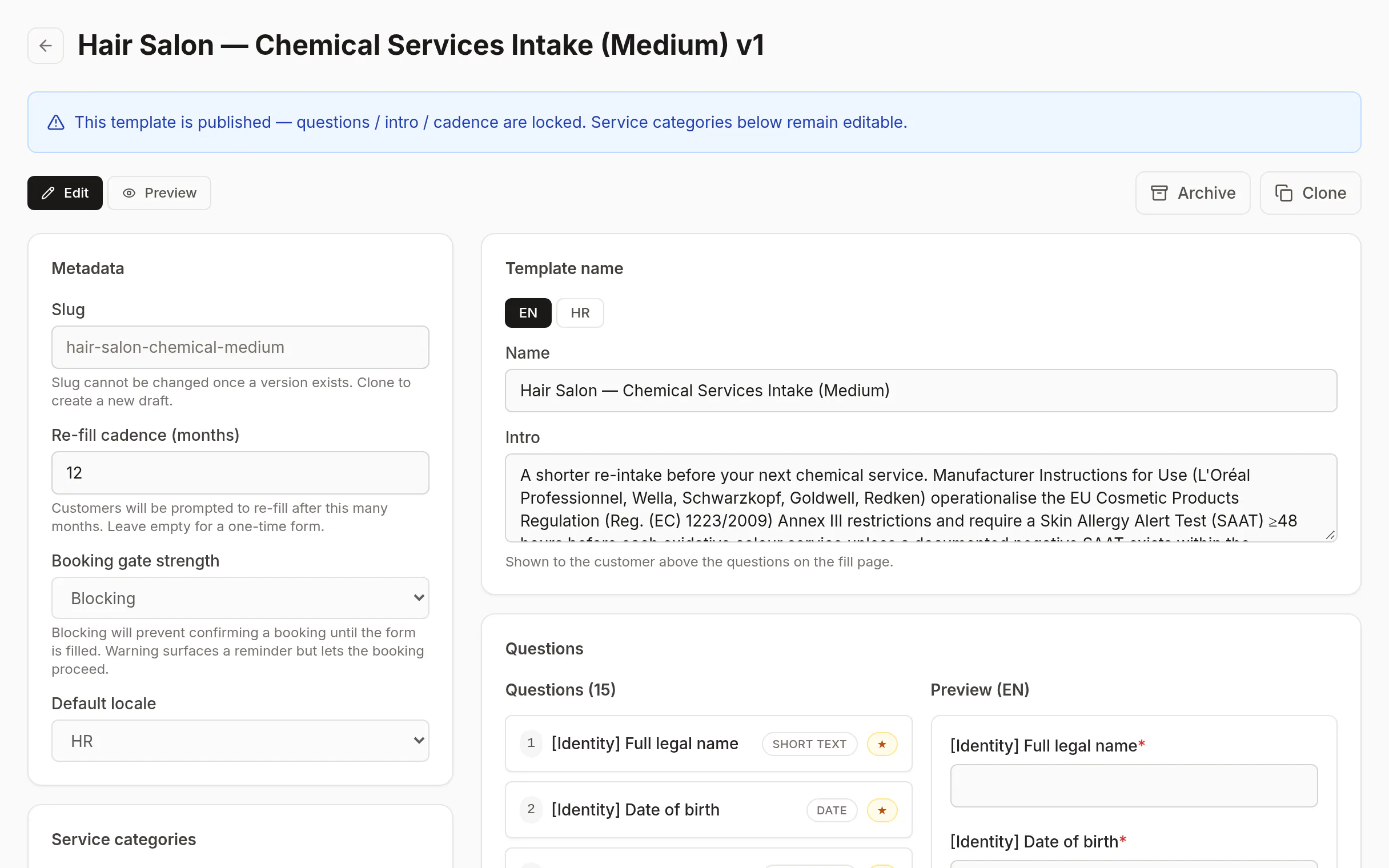
F9 comes with 39 ready-made intake questionnaires: 13 treatment types, each in short, medium and long versions, in Croatian and English. For a cosmetology studio the relevant ones include:
- General cosmetology — peels, microdermabrasion, microneedling, LED and extractions.
- Waxing — skin sensitivity, recent treatments and medication that affects the skin.
- Lash extensions — adhesive reactions and eye sensitivity.
- Microblading and permanent make-up.
- IPL and laser — skin type, recent sun exposure, photosensitising medication.
- Spray tan and sunbed, and massage.
Every template is a starting point, not a finished legal document. Change the questions, the wording and the language, then publish your own version. Questions can be short or long text, single or multiple choice, yes/no, a date or a photo. A short version suits a returning client, and the long one suits a first visit or a change of treatment.
You decide how often each form comes round again, from every 1 to 60 months or just once. The newest answers replace the last. A published form can either hold the booking until it's answered, or simply show a warning, depending on how strictly you want to run that treatment.
No signature, no treatment
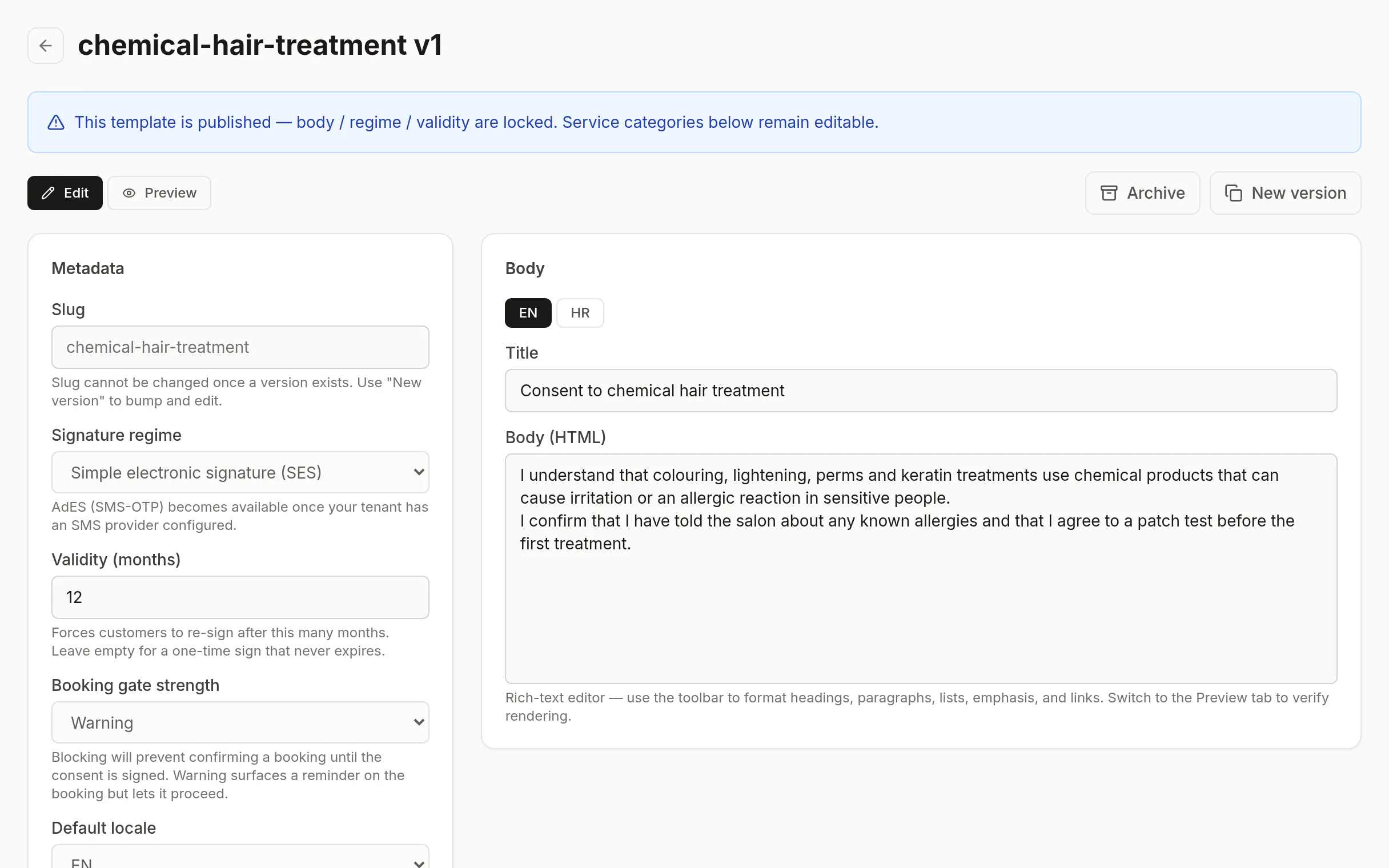
F9 seeds starter consent templates for lash extensions, microblading and permanent make-up, IPL and laser, and a general medical-aesthetics consent, alongside chemical hair colouring. They are placeholders, not finished legal text, so replace the wording with your own before you publish. You can draft any other form your studio needs. Each consent is versioned and set up in Croatian and English, with a validity window you choose.
The client signs on their own phone with their typed name and an explicit agreement. The time and device details are sealed together with the exact wording they agreed to. If anything is edited afterwards, the seal no longer matches, and the signed PDF is yours to download whenever you need it.
When a consent is wired to a service, a booking for that service can't be confirmed until the client has a current signature on file. Reception sends a one-time link that drops the client straight onto the right form. The link lapses after 72 hours or as soon as it has been used.
Lash adhesive and tint: patch tests on the record
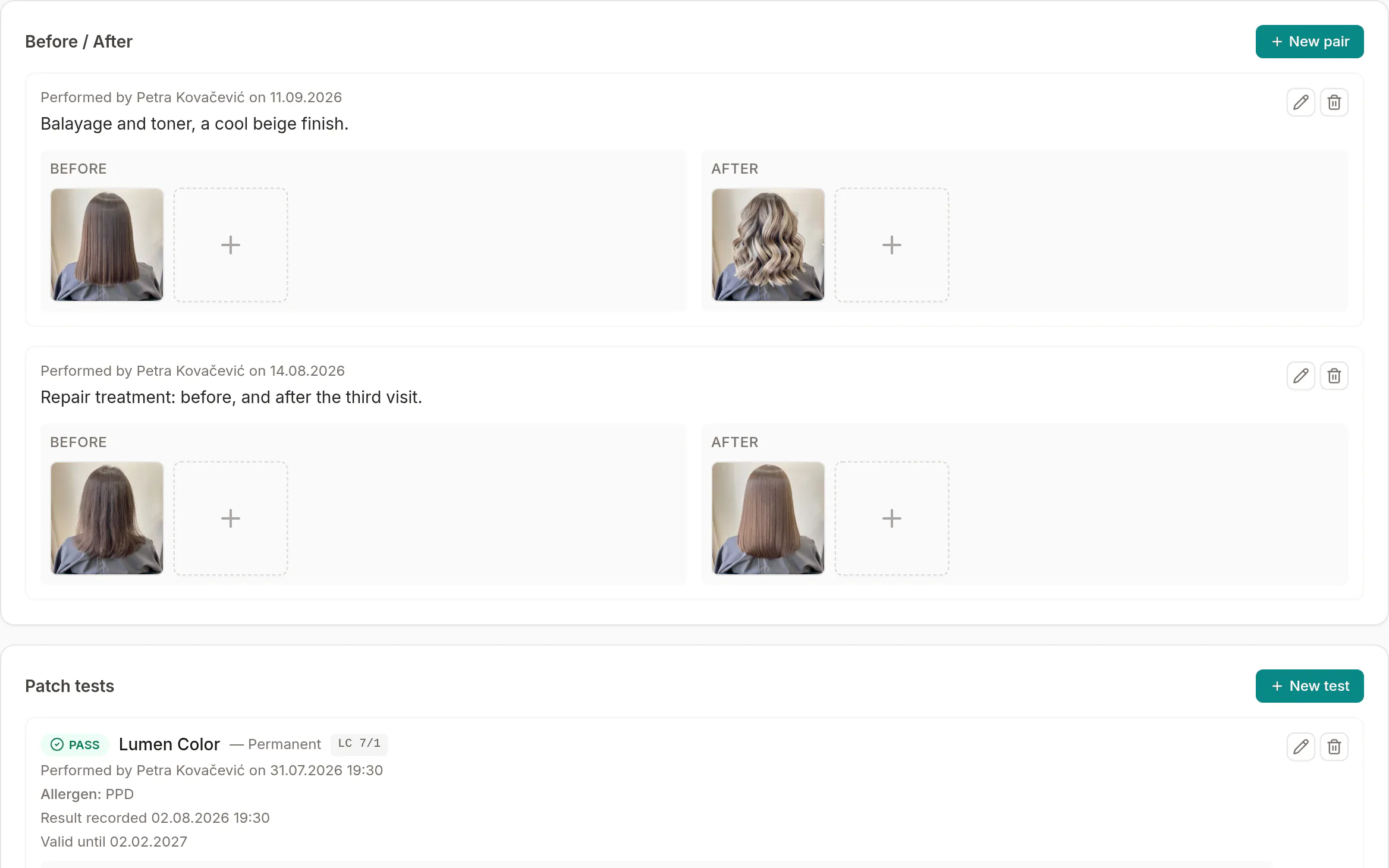
Lash adhesive and tint are the two products where a patch test earns its keep, and a clean result with one brand says nothing about the next. So F9 keeps more than a tick in a box. Each test names the product it was done with (brand, product line and product code) and the allergen category being checked, along with the therapist who did it, when it was applied and when it was read.
The outcome is one of pending, passed, failed or inconclusive, with encrypted reaction notes and an optional photo of the skin. A pass carries an expiry date, so on the day of a lash set or a tint the therapist can see whether the test on file is still current. The records stay on the card after a client stops coming, as part of your own history of what was done and when.
Before and after, kept private
Results are why clients come back, and photos show them. F9 keeps before-and-after pairs on the client's card, attached to the visit they belong to, with an encrypted caption. They're held in private storage in the EU and opened only through links that expire. Only the staff you allow can see them, so they never sit in a camera roll next to someone's holiday photos.
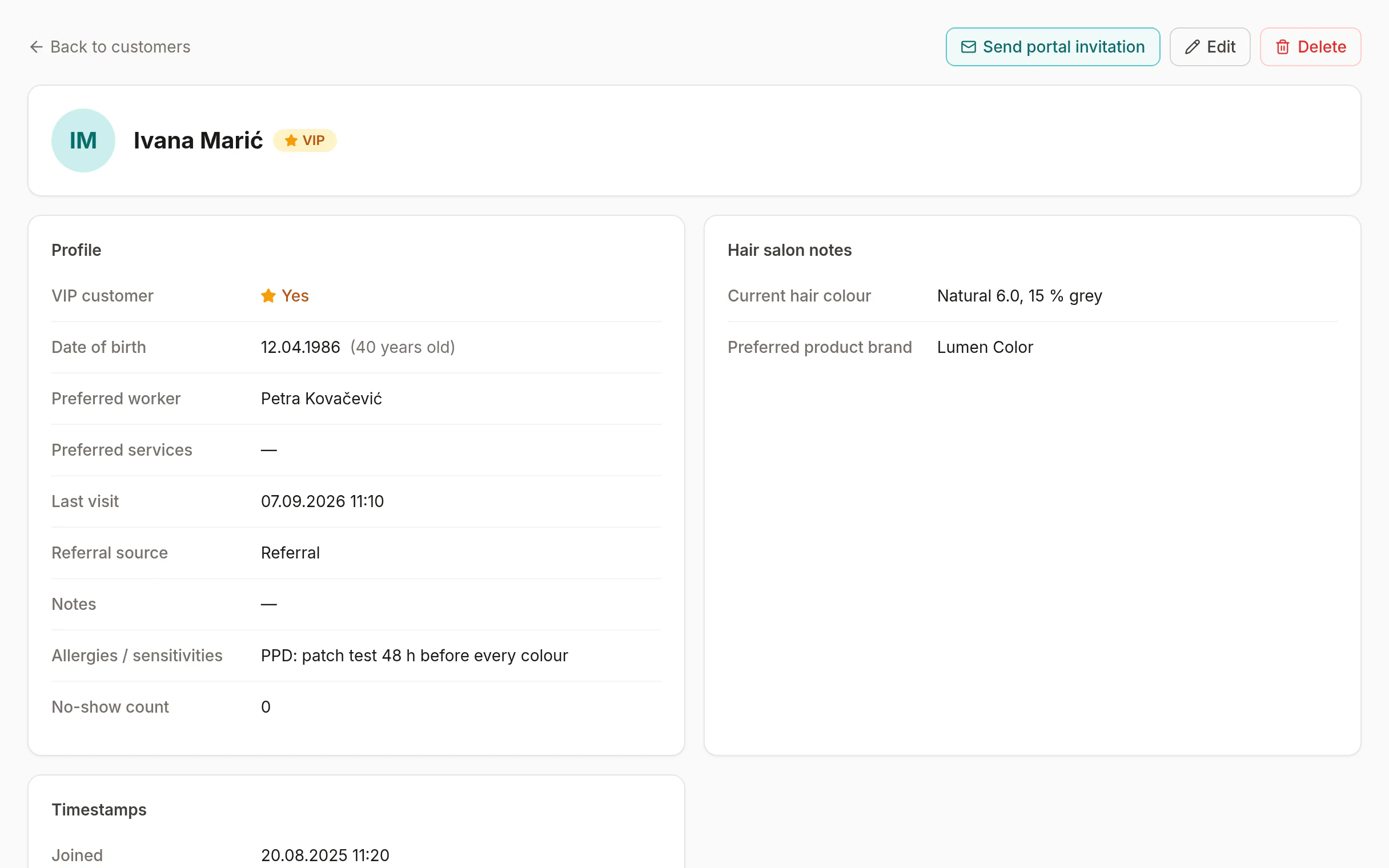
Therapists can also leave private notes on the client ("reacts to fragrance", "prefers the cooler room") and a short self-review of each visit, visible to the team and never to the client.
Product batches, expiry dates and the actual cost of a treatment
Serums, acids and lash adhesives have expiry dates, and a batch number matters when a client asks what was used on their skin. F9 can track batches and expiry dates per product. It issues the batch that expires first, and a near-expiry report shows what to use up or send back.
A service recipe lists what a treatment consumes: the peel solution, the neutraliser, the wax, the cartridges. Those products come off stock automatically when the ticket is paid, so stock levels match what was actually used. Back-bar stock can be kept separate from the retail shelf, low-stock alerts flag what's running out, and suppliers and purchase orders sit in the same place.
Courses of treatment as packages (Pro+)
Many cosmetology results come from a course rather than a single visit: six peels, a series of laser sessions, a monthly facial. On Pro+, F9 sells these as service packages (pre-paid bundles invoiced under Croatian single-purpose voucher rules, with VAT paid upfront), as memberships with included services and member discounts, and as gift cards. Clients see their remaining sessions in their own portal. Checkout puts treatments and retail skincare on one ticket and issues a fiscalised receipt with the JIR, the ZKI and a QR code; you need your own FINA certificate.
A diary that fits the treatment rooms
Clients book one or several treatments in a single appointment on your hosted booking page, through a Book now button on your own site, or from a QR code. They can choose a therapist or take the first free time. Staff can book recurring appointments for a course in one go. Each therapist has their own shifts, breaks and time off. With several locations, each keeps its own team and calendar while sharing one client base.
Client data under your control
Skin conditions, medication and photos are sensitive personal data. F9 encrypts client data with a key unique to your studio, keeps it in the EU, and lets you build roles so reception can run the diary without opening treatment notes. Clients can export or delete their own data from the portal. Erasure removes their identity after a 30-day cooling-off period, while your treatment records follow your retention policy.
Ready on the first day
The setup wizard pre-fills a starter cosmetology menu (facial, chemical peel, waxing, consultation) and the units your products come in, so you start by adjusting a menu rather than typing one from scratch.