
A small practice carries a big record-keeping load
A dental surgery, an aesthetic medicine practice or a small multi-specialty clinic has the same paperwork as a large one, with a fraction of the staff to do it. Medical history has to be current before treatment. Consents have to be signed for the procedures that need them. Reception has to run the diary without reading clinical notes. And when someone asks who changed a record, there has to be an answer.
F9.contact puts all of that on one card per client, filled in ahead of the visit, with access set by role.
Medical history before the patient arrives
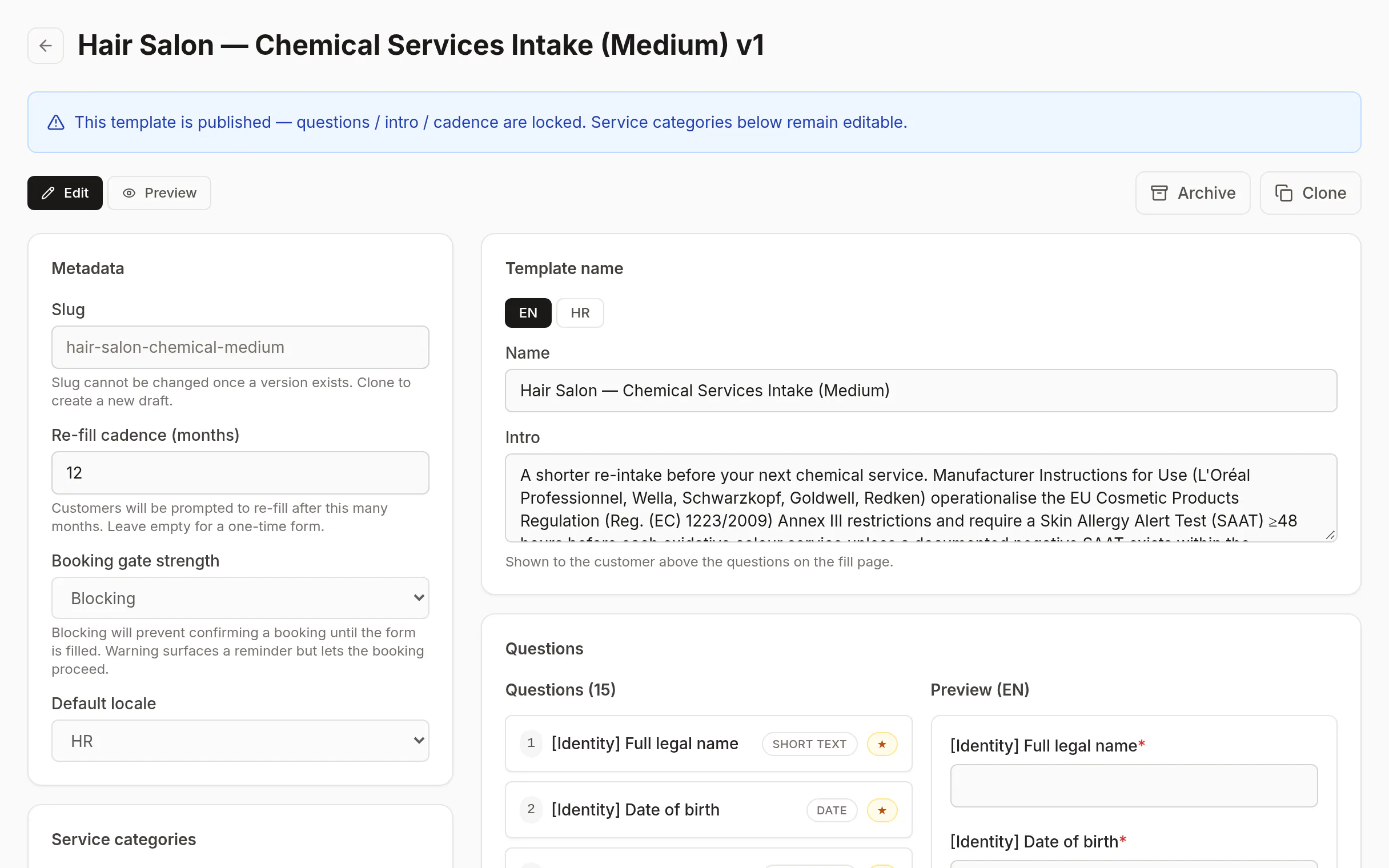
F9 comes with ready-made intake questionnaires in short, medium and long versions, in Croatian and English. For a practice the most relevant are:
- General dentistry — anticoagulants and other medication, cardiac risk, allergies to local anaesthetic, and the history a dentist needs before treatment.
- Aesthetic injectables — contraindications for fillers and botulinum toxin treatments.
- IPL and laser, microblading and permanent make-up, massage, and more, for practices that offer them.
Each template is a starting point. Change the questions and the wording, then publish your own version. Answers can be free text, a choice of one or several options, yes or no, a date or an uploaded photo.
Reception sends a one-time link and the patient answers on their own phone before the appointment. The link works for 72 hours and only once. You choose how often each form comes round again, from every month to every five years or just once, and the newest answers replace the last. A form can hold the booking, so the appointment isn't confirmed until there is a current answer on file. It can also simply show a warning when a softer reminder is enough.
Consents signed on the patient's phone
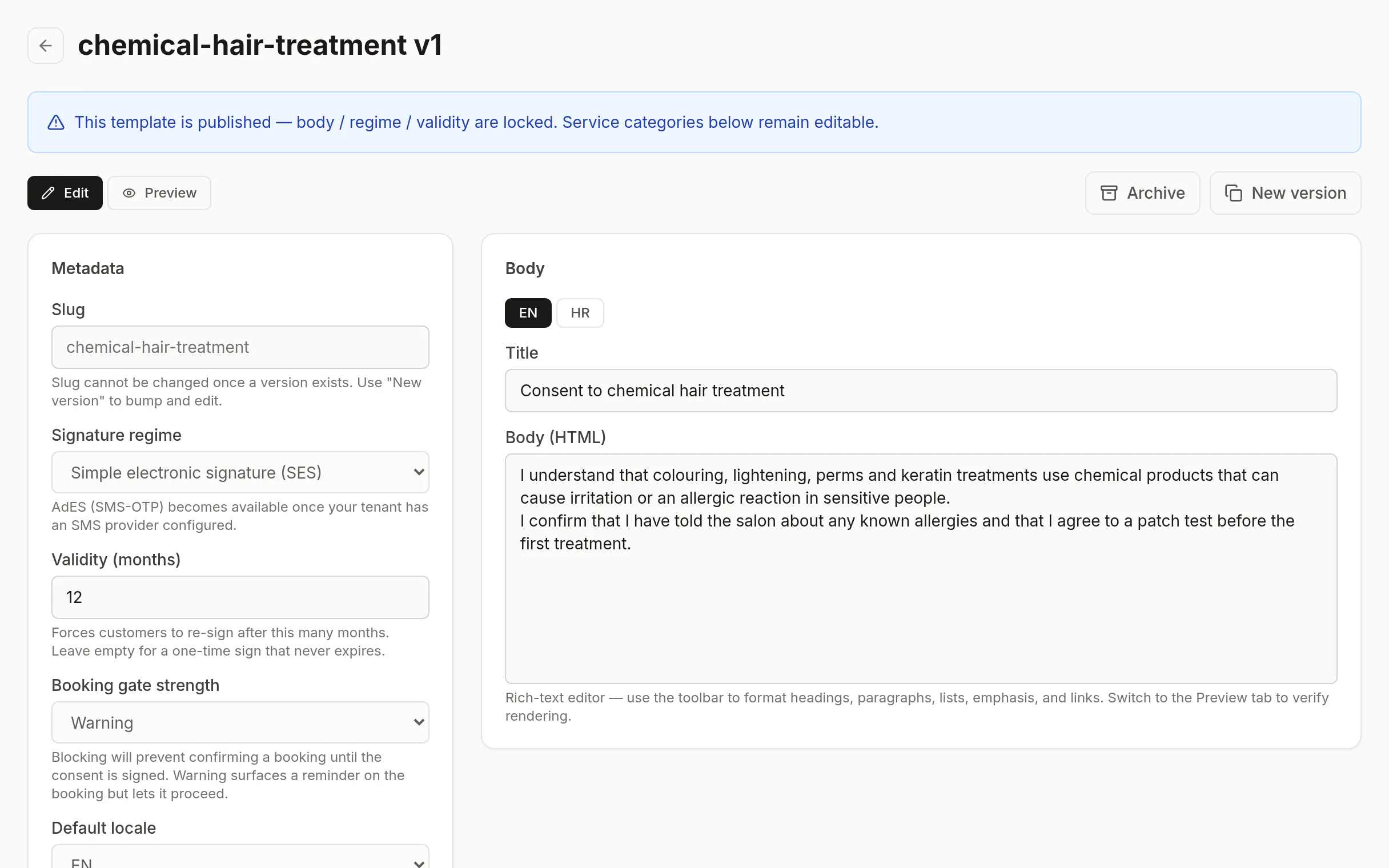
Consent forms are versioned, set up in Croatian and English, and drafted before they're published. F9 seeds starter templates for aesthetic medicine, IPL and laser, and microblading and permanent make-up. Treat them as drafts to rewrite, not as legal text that is ready to use. You can write any other consent your practice uses. The patient signs on their own phone with their typed name and an explicit agreement. The record is sealed together with the exact wording, the time and the device details. If anything is edited afterwards, the seal no longer matches. The signed PDF is there to download whenever you need it.
When a consent is linked to a procedure, a booking for that procedure can't be confirmed until there is a current signature on file.
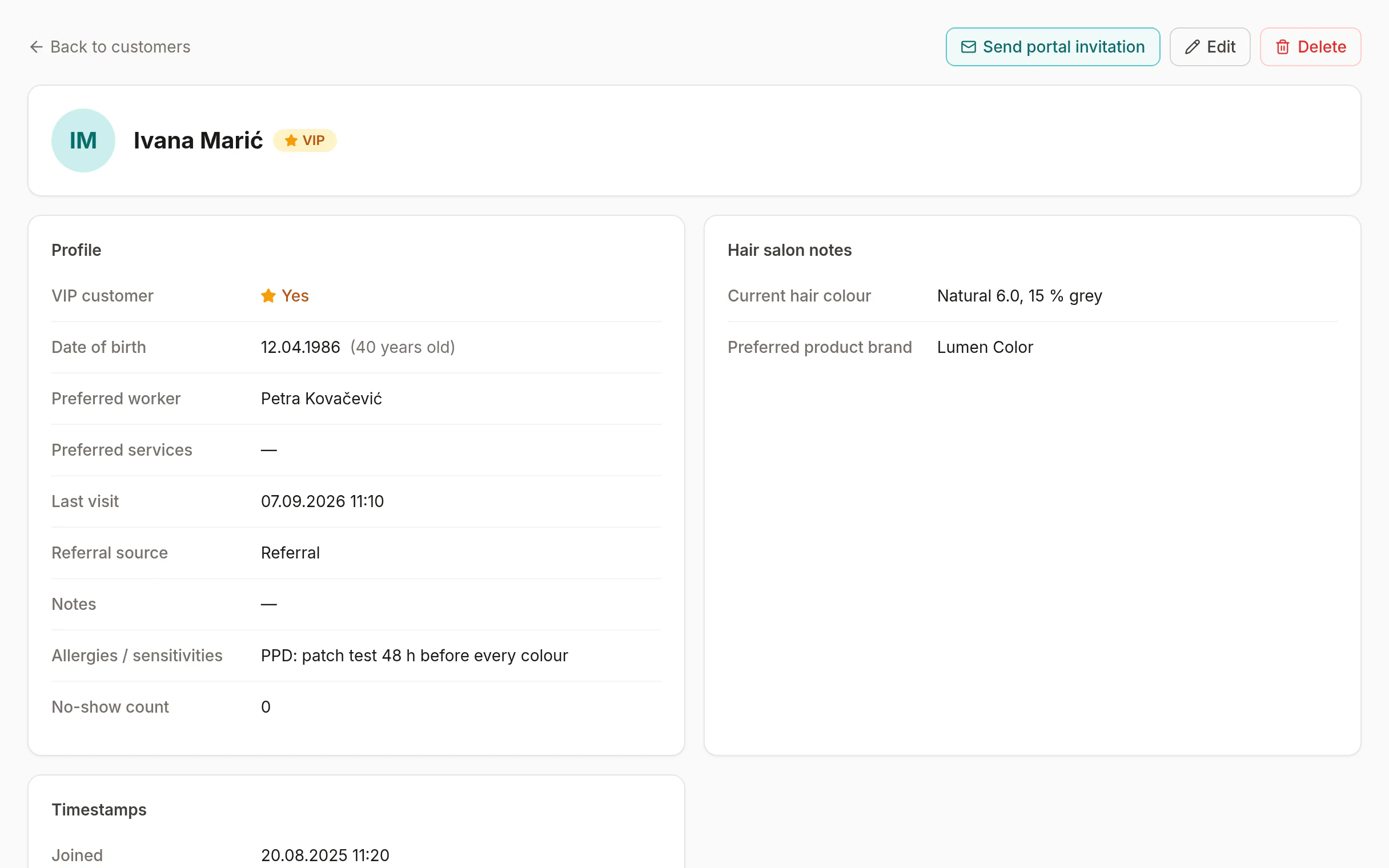
One card per client
Every visit, form, consent and note sits on one card. Allergies show as a clear warning on every booking for that client, so whoever opens the appointment sees them. Practitioners can keep private notes visible only to the team, and before-and-after photos are attached to the visit they belong to, held in private storage in the EU and opened only through links that expire. Patch tests are recorded with their result and a validity date, and kept even after a patient stops coming.
Everyone sees only what they should
A small practice still has distinct jobs. In F9 you build your own roles for reception, practitioners and managers, so reception can book, move and cancel appointments without opening a patient's treatment notes. A shared reception tablet can sit behind a PIN, so each person switches in with their own code and every action is attributed to the right person. An audit log records who changed what and when.
Follow-ups and a diary that holds together
Treatment often means a series: a consultation, the procedure, a check-up. Staff can book a recurring series (weekly, fortnightly or monthly) and cancel it as a whole if the plan changes. If a requested time isn't free, staff can look across several days and choose the next opening.
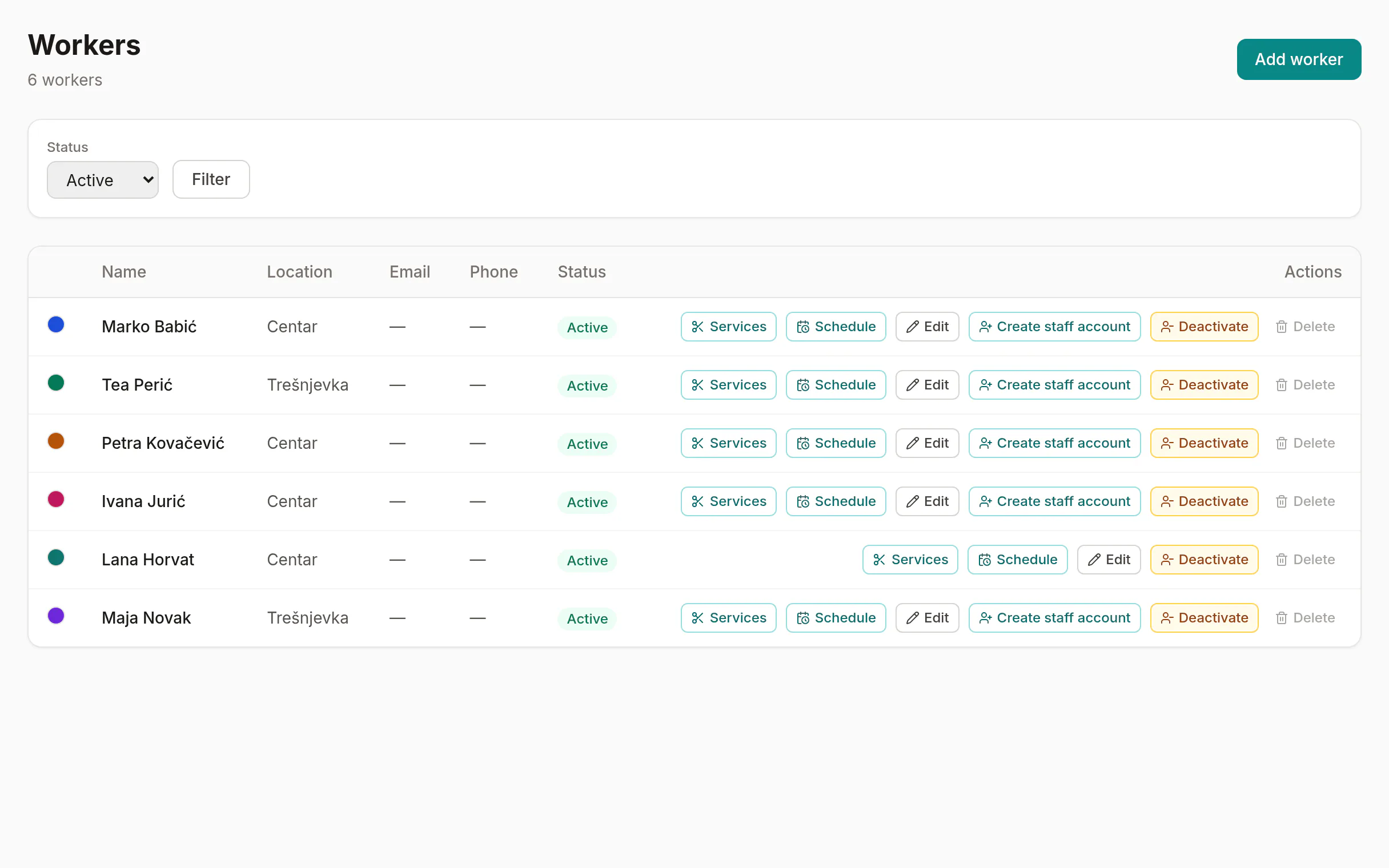
Each practitioner has their own shifts, breaks and time off. With more than one location, each has its own team and calendar. Holidays and closures can be set for the whole practice or for a single location. The calendar updates by itself within a second or two when a booking is made or moved anywhere, so reception and practitioners always look at the same day. Patients get a confirmation email, and a reminder about a day ahead, which a patient can turn off for your practice.
Patients who prefer to book themselves can use your hosted booking page or a Book now button on your site. A guest booking is only a request until the patient confirms their email address, so invented bookings never take up a practitioner's time.
Supplies, tracked by batch
A practice uses consumables that expire and that sometimes have to be traced: anaesthetic cartridges, filler, single-use kits. F9 can track batches and expiry dates. It issues the batch that expires first and shows a near-expiry report. A service recipe deducts what a procedure uses when it's paid for, and low-stock alerts flag what needs ordering, with suppliers and purchase orders in the same place. Starter units include ml, mg, pieces and boxes.
Data protection built in, not bolted on
Health information is the most sensitive data a business can hold. F9 encrypts client data with a key unique to your practice and keeps it in the EU. Patients can export or delete their own data from the portal. When a patient asks to be forgotten, their identity is erased after a 30-day cooling-off period, while the treatment records stay under your own retention policy, so the practice keeps the history it has to keep. Financial documents are never touched by an erasure.
Checkout and fiscal receipts (Pro+)
On Pro+, every sale is fiscalised automatically with the Tax Administration. Each receipt carries a JIR, a ZKI and a QR code that can be scanned, and you need your own FINA certificate. A reversed sale gets a proper storno credit note rather than a deleted original, and the cash book and daily close are included.
Reports and setup
Reports cover revenue by service, practitioner and location, booking volumes and peak hours, patient retention, and each practitioner's utilisation, with CSV export. The setup wizard pre-fills a starter menu (consultation, treatment, follow-up) that you rename and price, so the practice can take its first booking on the day it signs up.